Buy evabf.com ?
We are moving the project
evabf.com .
Are you interested in purchasing the domain
evabf.com ?
domain@kv-gmbh.de · 0541-91531010
Buy evabf.com ?
How do you convert ln to ln?
To convert ln to ln, you do not need to do anything as they are the same function. The natural logarithm function is denoted by ln, so ln is already in the form of the natural logarithm. **
Why is ln(14) equal to ln(4)?
ln(14) is not equal to ln(4). ln(14) is the natural logarithm of 14, while ln(4) is the natural logarithm of 4. These two values are not equal to each other. **


Similar search terms for Ln
Top-Angebote
Products related to Ln:
-
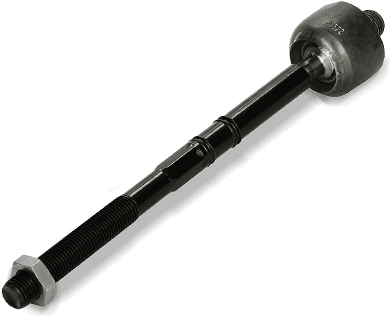
MOOG LN-AX-2677 Inner tie rodLength [mm]: 216; Diameter 1 [mm]: 14,5; Thread Type: with right-hand thread; Container Type: Box; Thread Size 1: M14X1.5; Thread Size 2: M14X1.5; Packaging length [cm]: 34,5; Packaging width [cm]: 8,5; Packaging height [cm]: 6,5; Fitting Position: Front Axle10,99 £*Shipping: 8,45 £Secure redirect to the provider
-
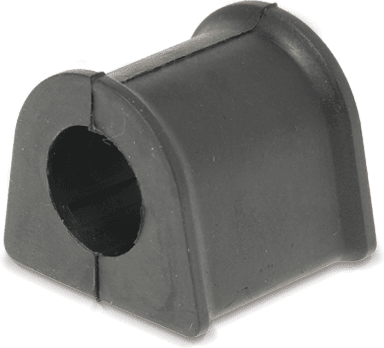
MOOG LN-SB-4864 Trailing arm / Suspension arm bushDiameter: 14,5; Length [mm]: 60,5; Height: 52; Container Type: Bag; Packaging length [cm]: 6; Packaging width [cm]: 6; Packaging height [cm]: 5,5; Fitting Position: Front Axle, both sides, Rear14,49 £*Shipping: 8,45 £Secure redirect to the provider
-
Daily Discovery Women's Yoga Top Long Sleeve Workout Shirt Breathable Moisture Wicking Activewear black mFeel confident and comfortable through every workout with this Women's yoga top designed to move with your body. Made for yoga, gym sessions, running, and outdoor training, this fitted longsleeve performance top combines lightweight comfort with...44,97 $*Shipping: 0,00 $Secure redirect to the provider


-
Why is ln(x) = 1, ln(x) = pi, ln(x) = i with x > 0?
The natural logarithm function, ln(x), is the inverse of the exponential function, e^x. When ln(x) = 1, it means that e^1 = x, so x = e. When ln(x) = pi, it means that e^pi = x. And when ln(x) = i, it means that e^i = x. In all cases, x is a positive real number because e raised to any real number or imaginary number is always positive. **
-
Why are ln(0.5) and ln(2) the same?
ln(0.5) and ln(2) are the same because they are inverse operations of each other. The natural logarithm function ln(x) is the inverse of the exponential function e^x. So, ln(0.5) is the exponent to which e must be raised to equal 0.5, and ln(2) is the exponent to which e must be raised to equal 2. Since 0.5 and 2 are reciprocals of each other, their natural logarithms will be equal. **
-
What is ln?
ln stands for the natural logarithm, which is the logarithm to the base of the mathematical constant e (approximately equal to 2.71828). It is commonly used in mathematics to solve exponential equations and to represent the inverse operation of the exponential function. The natural logarithm is denoted by the symbol ln(x), where x is the number for which the logarithm is being calculated. **
-
What is the derivative of ln(x) + x + ln(2x)?
The derivative of ln(x) is 1/x, the derivative of x is 1, and the derivative of ln(2x) is 2/x. Therefore, the derivative of ln(x) + x + ln(2x) is 1/x + 1 + 2/x. **


Is ln(e^x) and e^(ln(x)) the same?
No, ln(e^x) and e^(ln(x)) are not the same. ln(e^x) simplifies to x, while e^(ln(x)) simplifies to x. This is because ln(e^x) is the natural logarithm of e raised to the power of x, which simplifies to x, and e^(ln(x)) is e raised to the power of the natural logarithm of x, which also simplifies to x. Therefore, ln(e^x) and e^(ln(x)) are equivalent and both simplify to x. **
What is the derivative of ln(x^2 * ln(x^2))?
To find the derivative of ln(x^2 * ln(x^2)), we can use the chain rule. First, we can rewrite the function as ln(x^2) + ln(ln(x^2)). Then, we can take the derivative of each part separately. The derivative of ln(x^2) is 2x/x^2 = 2/x, and the derivative of ln(ln(x^2)) is 1/ln(x^2) * 1/x^2 * 2x = 2/(x*ln(x^2)). Therefore, the derivative of ln(x^2 * ln(x^2)) is 2/x + 2/(x*ln(x^2)). **
Top-Angebote
Products related to Ln:
-
MOOG LN-TC-4835 Suspension armControl/Trailing Arm Type: Control Arm; Container Type: Box; Supplementary Article / Supplementary Info Info 2: with ball joint, with rubber mount; Paired product: LN-TC-4800; Packaging length [cm]: 51; Packaging width [cm]: 44,5; Packaging height [cm]: 15; Fitting Position: Front Axle Right63,99 £*Shipping: 8,45 £Secure redirect to the provider
-
MOOG LN-WP-13620 Suspension armControl/Trailing Arm Type: Control Arm; Container Type: Box; Supplementary Article / Supplementary Info Info 2: with ball joint, with rubber mount; Paired product: LN-WP-13619; Packaging length [cm]: 61,2; Packaging width [cm]: 34,4; Packaging height [cm]: 8,8; Fitting Position: Front Axle Right50,99 £*Shipping: 8,45 £Secure redirect to the provider
-
MOOG LN-AX-2677 Inner tie rodLength [mm]: 216; Diameter 1 [mm]: 14,5; Thread Type: with right-hand thread; Container Type: Box; Thread Size 1: M14X1.5; Thread Size 2: M14X1.5; Packaging length [cm]: 34,5; Packaging width [cm]: 8,5; Packaging height [cm]: 6,5; Fitting Position: Front Axle10,99 £*Shipping: 8,45 £Secure redirect to the provider
-
How do you convert ln to ln?
To convert ln to ln, you do not need to do anything as they are the same function. The natural logarithm function is denoted by ln, so ln is already in the form of the natural logarithm. **
-
Why is ln(14) equal to ln(4)?
ln(14) is not equal to ln(4). ln(14) is the natural logarithm of 14, while ln(4) is the natural logarithm of 4. These two values are not equal to each other. **
-
Why is ln(x) = 1, ln(x) = pi, ln(x) = i with x > 0?
The natural logarithm function, ln(x), is the inverse of the exponential function, e^x. When ln(x) = 1, it means that e^1 = x, so x = e. When ln(x) = pi, it means that e^pi = x. And when ln(x) = i, it means that e^i = x. In all cases, x is a positive real number because e raised to any real number or imaginary number is always positive. **
-
Why are ln(0.5) and ln(2) the same?
ln(0.5) and ln(2) are the same because they are inverse operations of each other. The natural logarithm function ln(x) is the inverse of the exponential function e^x. So, ln(0.5) is the exponent to which e must be raised to equal 0.5, and ln(2) is the exponent to which e must be raised to equal 2. Since 0.5 and 2 are reciprocals of each other, their natural logarithms will be equal. **
Similar search terms for Ln
-
MOOG LN-SB-4864 Trailing arm / Suspension arm bushDiameter: 14,5; Length [mm]: 60,5; Height: 52; Container Type: Bag; Packaging length [cm]: 6; Packaging width [cm]: 6; Packaging height [cm]: 5,5; Fitting Position: Front Axle, both sides, Rear14,49 £*Shipping: 8,45 £Secure redirect to the provider
-
Daily Discovery Women's Yoga Top Long Sleeve Workout Shirt Breathable Moisture Wicking Activewear black mFeel confident and comfortable through every workout with this Women's yoga top designed to move with your body. Made for yoga, gym sessions, running, and outdoor training, this fitted longsleeve performance top combines lightweight comfort with...44,97 $*Shipping: 0,00 $Secure redirect to the provider
-
Hinkler Anatomy Of Fitness Yoga The Trainers Inside Guide Complete Workout KitThis kit contains: high-quality yoga strap, yoga block to support and assist body alignment, complete yoga program DVD, activation card to access the yoga program online, instructional 64-page yoga book.5,98 £*Shipping: 2,99 £Secure redirect to the provider
-
Smart Shopping Spot Pro Interval Workout Timer Digital Interval Timer For HIIT, Boxing, Yoga & Fitness Training Pro Interval Workout Timer Digital Interval Timer For HIIT, Boxing, Yoga & Fitness TrainingTake every workout to the next level with a timer that keeps you focused on performance instead of the clock. This interval timer is designed for athletes, fitness enthusiasts, coaches, and anyone following structured training routines. Whether...64,97 $*Shipping: 0,00 $Secure redirect to the provider
-
What is ln?
ln stands for the natural logarithm, which is the logarithm to the base of the mathematical constant e (approximately equal to 2.71828). It is commonly used in mathematics to solve exponential equations and to represent the inverse operation of the exponential function. The natural logarithm is denoted by the symbol ln(x), where x is the number for which the logarithm is being calculated. **
-
What is the derivative of ln(x) + x + ln(2x)?
The derivative of ln(x) is 1/x, the derivative of x is 1, and the derivative of ln(2x) is 2/x. Therefore, the derivative of ln(x) + x + ln(2x) is 1/x + 1 + 2/x. **
-
Is ln(e^x) and e^(ln(x)) the same?
No, ln(e^x) and e^(ln(x)) are not the same. ln(e^x) simplifies to x, while e^(ln(x)) simplifies to x. This is because ln(e^x) is the natural logarithm of e raised to the power of x, which simplifies to x, and e^(ln(x)) is e raised to the power of the natural logarithm of x, which also simplifies to x. Therefore, ln(e^x) and e^(ln(x)) are equivalent and both simplify to x. **
-
What is the derivative of ln(x^2 * ln(x^2))?
To find the derivative of ln(x^2 * ln(x^2)), we can use the chain rule. First, we can rewrite the function as ln(x^2) + ln(ln(x^2)). Then, we can take the derivative of each part separately. The derivative of ln(x^2) is 2x/x^2 = 2/x, and the derivative of ln(ln(x^2)) is 1/ln(x^2) * 1/x^2 * 2x = 2/(x*ln(x^2)). Therefore, the derivative of ln(x^2 * ln(x^2)) is 2/x + 2/(x*ln(x^2)). **
* All prices are inclusive of VAT and, if applicable, plus shipping costs. The offer information is based on the details provided by the respective shop and is updated through automated processes. Real-time updates do not occur, so deviations can occur in individual cases. ** Note: Parts of this content were created by AI.